MY STORY
How Post-Finasteride Syndrome Changed My Life... And Why I Created The PFS Recovery Program
By Oliver Connaughton
Founder of OC NutriHealth | Nutritional Therapist (DipNT, mBANT) | Personal Trainer
Introduction
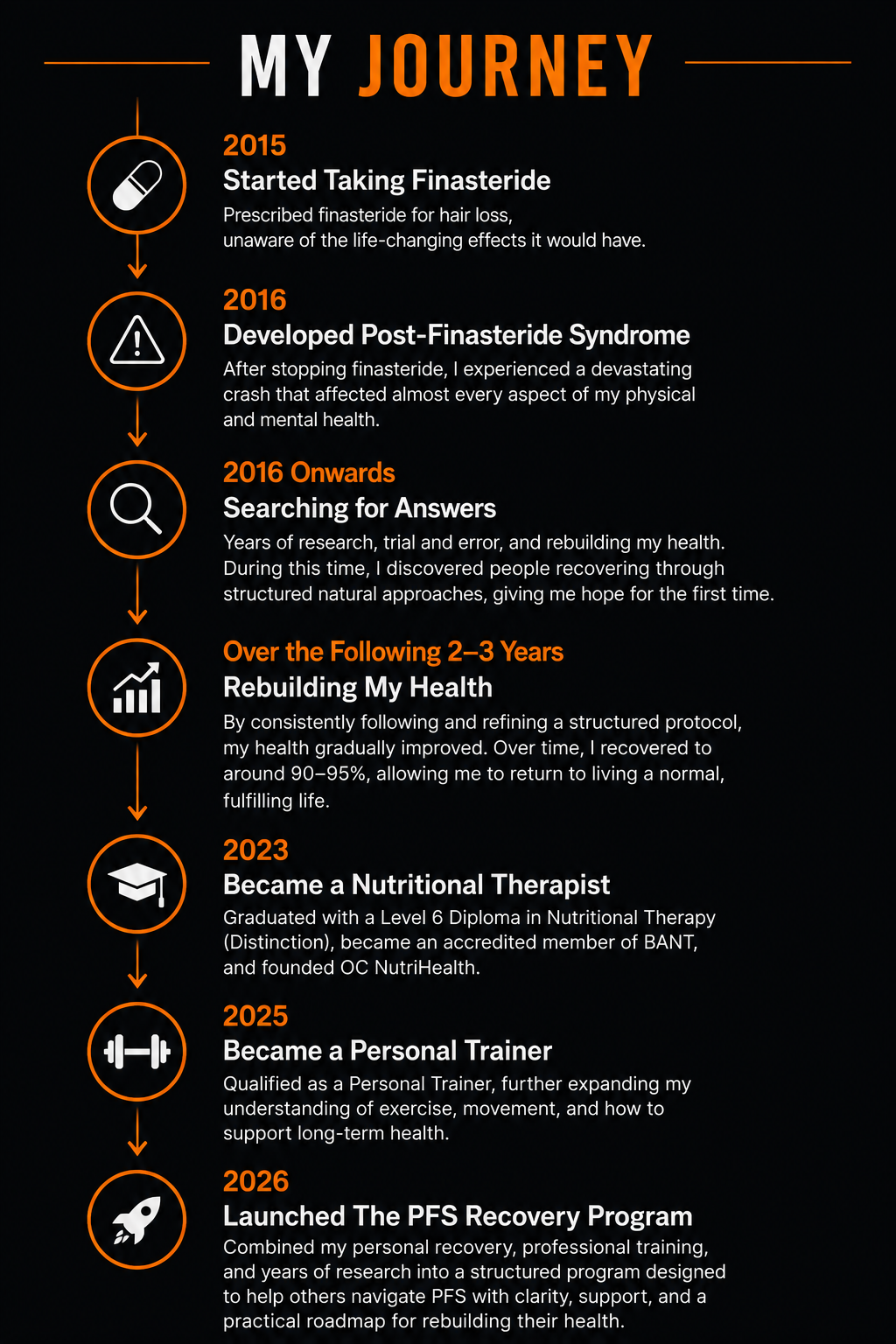
In 2016, after taking finasteride, I developed Post-Finasteride Syndrome (PFS). What followed were some of the most challenging years of my life.
Like many others, I spent years searching for answers, trying different supplements, reading countless forum posts, and hoping to find the one thing that would fix everything. Over time, I realised that recovery wasn't about finding a miracle cure. It was about consistently rebuilding my health, one step at a time.
This page shares my journey, the lessons I learned along the way, and how those experiences ultimately led me to create The PFS Recovery Program. My hope is that it gives you reassurance, direction, and the confidence to focus on what you can control.
Recovery isn't always straightforward, but I want you to know that you're not alone.
Life Before PFS
Before developing Post-Finasteride Syndrome (PFS), I lived a fairly typical life.
I wasn't particularly interested in nutrition or fitness. Outside of work, I spent a lot of my free time gaming and lived a fairly sedentary lifestyle. Health wasn't something I thought much about because, like most people, I took it for granted.
Like many men, I eventually came across finasteride. At the time, it seemed like a simple decision, and I had no reason to believe it would have such a profound impact on my health and the years that followed.
Looking back now, I had no idea how much my life was about to change.
The Beginning of PFS
In 2016, I decided to take finasteride after noticing some early signs of hair loss. Like many men, I believed it was a safe and well-tolerated medication. I had no reason to think otherwise.
At first, my symptoms were relatively minor. I noticed changes that didn't feel quite right, but nothing that made me realise the extent of what was happening.
Over time, however, my health continued to decline. My symptoms gradually became more noticeable, and eventually I experienced a frightening episode where I fainted. It was clear that something wasn't right.
After stopping finasteride, I hoped things would improve.
Instead, my health deteriorated even further.
I experienced what many people now describe as a "crash." My symptoms became significantly worse, affecting almost every aspect of my life. The person I had been before taking finasteride felt like a distant memory.
At that point, I knew this was far more than a temporary reaction. I began searching for answers, trying to understand what had happened and whether recovery was possible.
I wanted to be the person I was before.
Rock Bottom
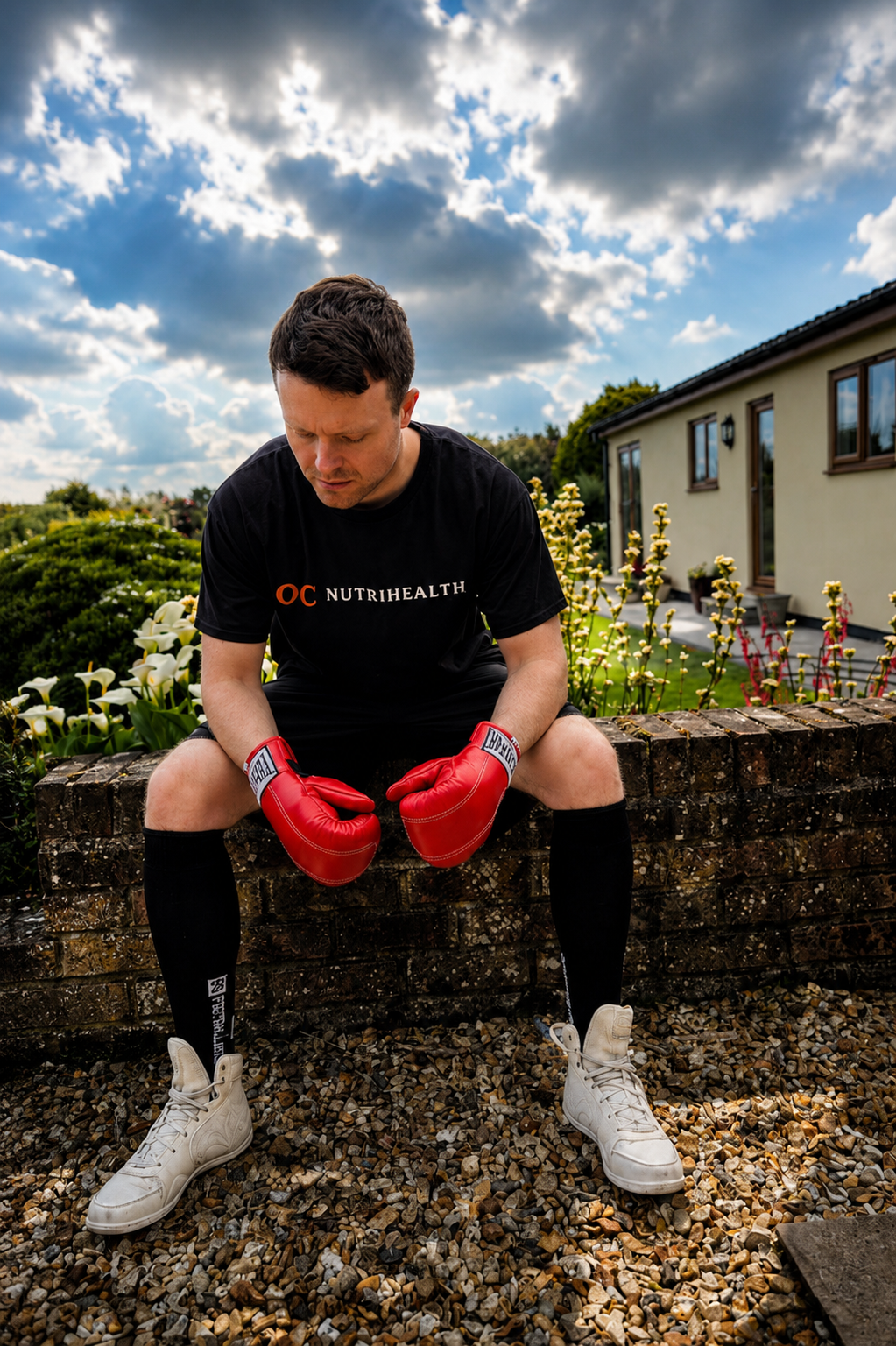
After my symptoms worsened, my life became consumed by trying to understand what had happened.
I saw multiple healthcare professionals, including GPs and endocrinologists, hoping someone could explain why I felt the way I did. Despite numerous appointments, I struggled to find answers that reflected what I was experiencing. At one stage, I was even offered antidepressants, despite feeling that they didn't address the underlying problem.
As my health continued to decline, I reached a point where I could barely function. Even simple daily tasks became difficult, and much of the research into PFS, potential treatments, and emerging information was done by my dad because I simply wasn't well enough to do it myself.
Together, we spent countless hours reading forum posts, researching possible treatments, trying different supplements, and searching for anything that might help.
Every new theory brought hope. Every setback was frustrating.
Over time, I realised that constantly chasing the next supplement or protocol wasn't just exhausting, it was keeping my entire life centred around PFS.
Although those years taught me a great deal, I eventually came to an important realisation: recovery wasn't going to come from endlessly searching for a miracle cure.
Something had to change.
Finding Hope
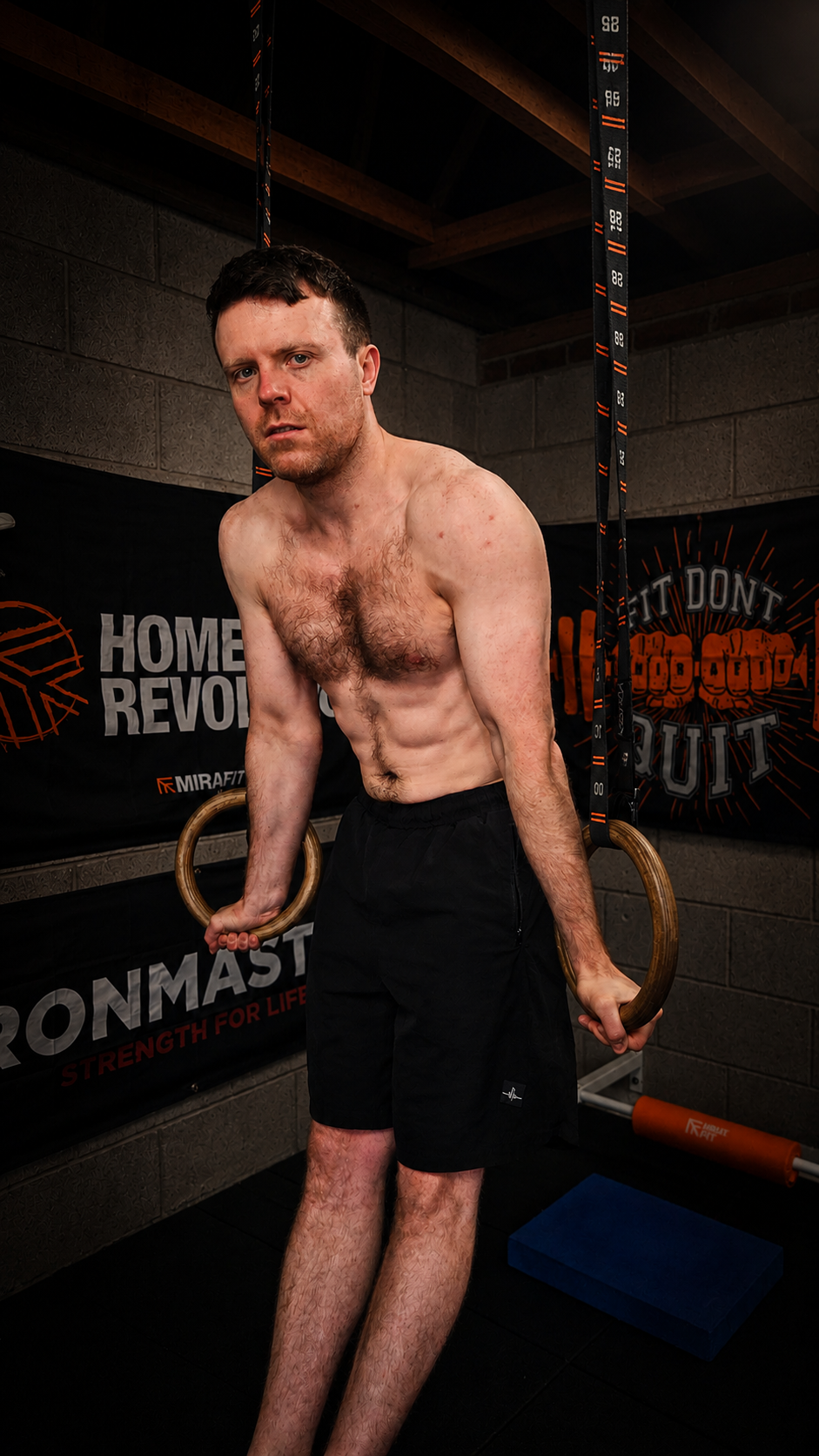
After years of searching for answers, I came across people who had recovered from PFS using natural approaches focused on rebuilding their overall health.
For the first time since developing PFS, I felt genuine hope.
Although everyone's journey was different, I noticed a common pattern. Those who appeared to make the greatest progress weren't searching for a single miracle cure. Instead, they were consistently improving the foundations of their health through nutrition, exercise, sleep, stress management, and long-term lifestyle changes.
It completely changed the way I viewed recovery.
For a long time, my focus had been almost entirely on getting rid of symptoms. Every day, I found myself asking:
"What will fix my PFS?"
Eventually, I started asking a different question:
"What can I do today to improve my health?"
That shift changed everything.
Rather than chasing the next supplement, medication, or theory, I began focusing on building the healthiest body possible. I improved my nutrition, became physically active, prioritised sleep, supported my gut health, reduced unnecessary toxin exposure, and developed habits that supported my body over the long term.
Recovery didn't happen overnight, but over time my health gradually improved. Ironically, many of my symptoms began improving when my attention shifted away from constantly analysing them and towards rebuilding my health instead.
Rebuilding My Health
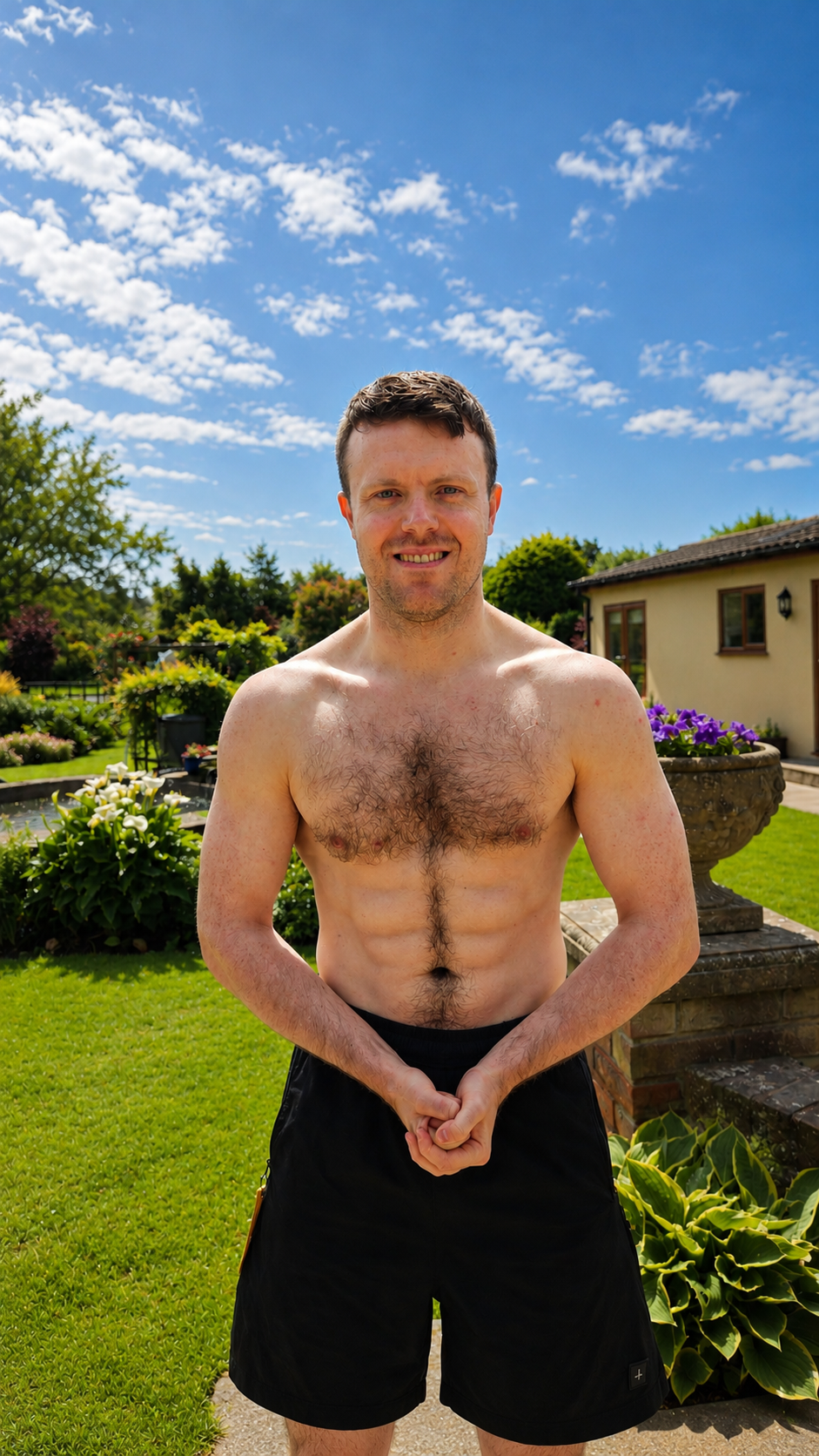
With a renewed sense of hope, I committed myself to rebuilding my health one step at a time.
I began by focusing on improving my body's foundations through a structured detoxification phase. From there, I gradually built my own recovery protocol, using the successful approaches of others as a starting point while refining and expanding it through my own research, experience, and the progress I was making along the way.
Rather than searching for a single solution, I focused on consistently improving the foundations of health. I transformed my nutrition, became physically active, prioritised sleep, supported my gut health, reduced unnecessary toxin exposure, and developed habits that I could maintain over the long term.
Recovery wasn't quick, and it certainly wasn't linear. There were setbacks along the way, and progress often came in small steps rather than overnight breakthroughs. However, as the months and years passed, those small improvements began to add up.
Over time, I continued refining my protocol based on what I learned through my own recovery, scientific research, and eventually my professional training as a Nutritional Therapist.
Today, I consider myself around 90-95% recovered. While I still experience the occasional symptom from time to time, I can live a normal, healthy, and active life again.
Looking back, I don't believe there was one thing that changed everything. It was the combination of consistently doing many small things well over a long period of time that made the biggest difference.
That philosophy continues to form the foundation of everything I coach today.
Becoming a Nutritional Therapist
As my health continued to improve, my curiosity only grew stronger.
I didn't just want to know what had helped me recover. I wanted to understand why.
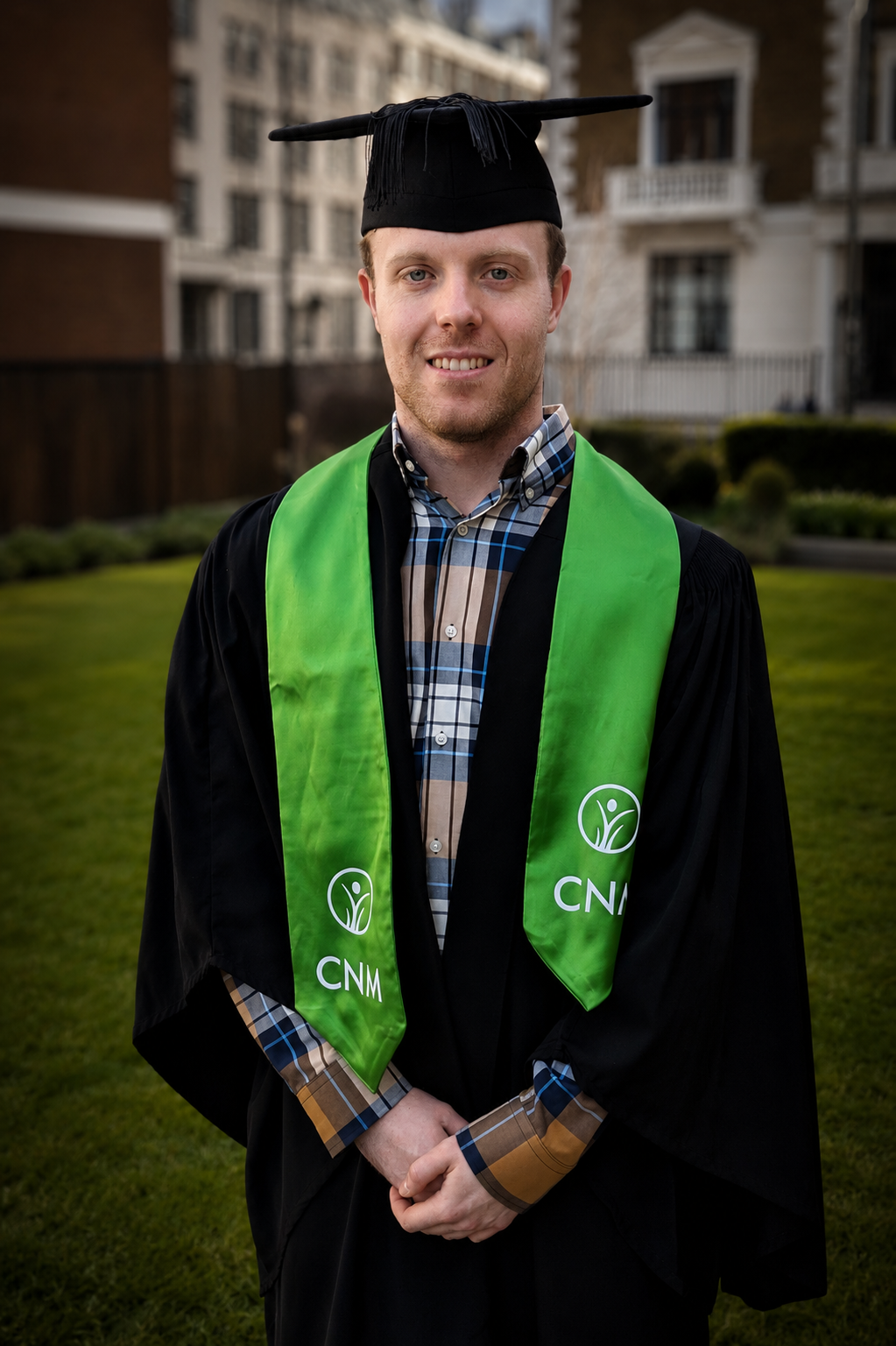
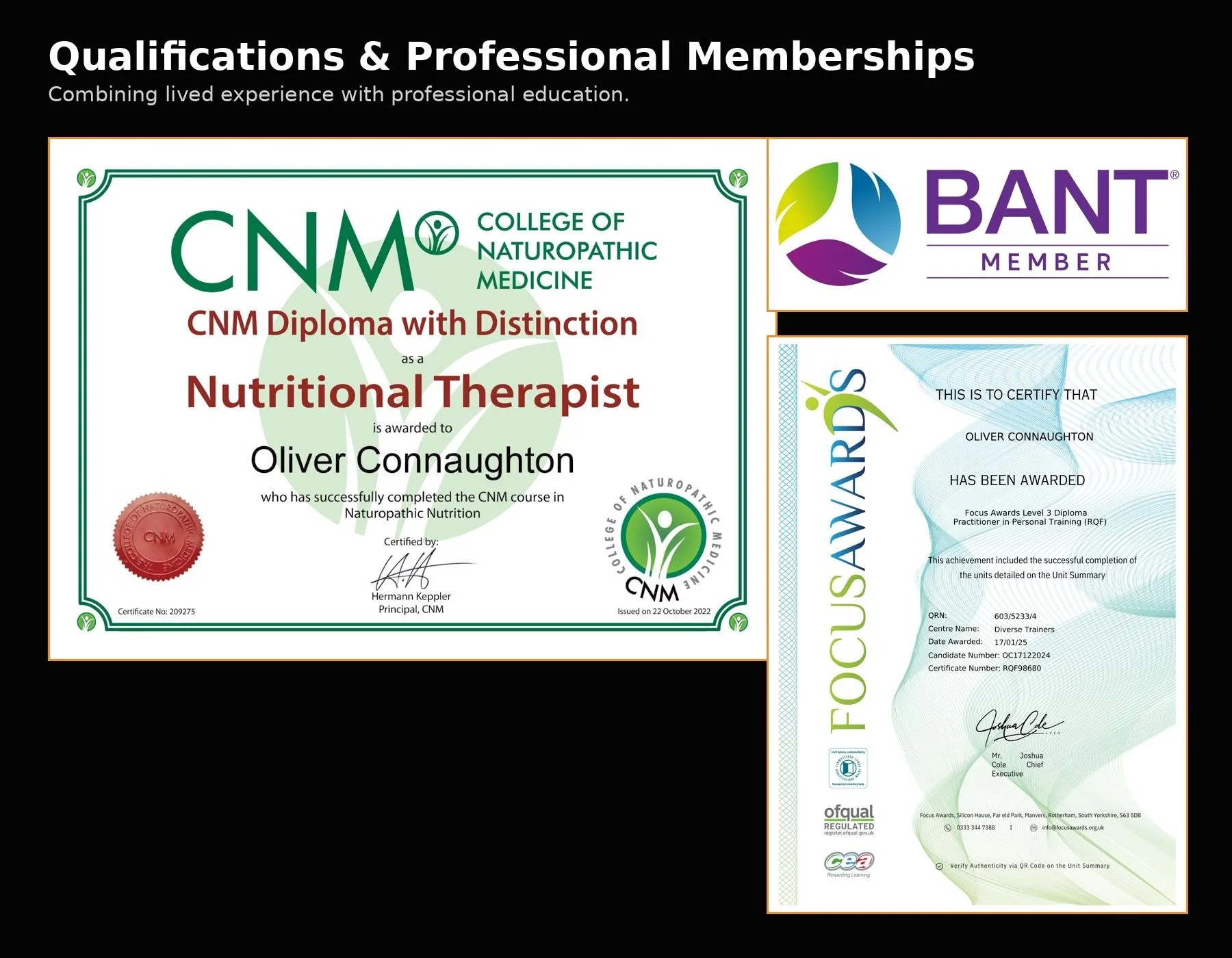
That curiosity led me to study Nutritional Therapy, while also qualifying as a Personal Trainer. Together, these qualifications gave me a deeper understanding of nutrition, exercise, hormones, recovery, and the lifestyle factors that influence long-term health.
Throughout my studies, I continually compared what I was learning with my own recovery experience. It allowed me to refine my protocol even further, combining scientific knowledge with practical, real-world experience.
After years of dedication, I graduated with a Level 6 Diploma in Nutritional Therapy with Distinction and became an accredited member of the British Association for Nutrition and Lifestyle Medicine (BANT).
My recovery gave me firsthand experience of what living with Post-Finasteride Syndrome can be like.
My education gave me the scientific understanding to support others in a more structured and evidence-informed way.
Together, those experiences became the foundation of everything I do today.
Why I Created OC NutriHealth
Recovering from Post-Finasteride Syndrome changed my life, but it also changed the direction of my career.
I realised that everything I had learned throughout my own recovery could help other men facing the same battle.
When I first developed PFS, I felt completely alone. There was no clear roadmap, very little support, and very few professionals who even recognised what I was experiencing. Most people were left trying to piece together information from online forums, often feeling overwhelmed by conflicting advice and endless negativity.
I knew there had to be a better way.
That is why I created OC NutriHealth.
My goal wasn't simply to become another Nutritional Therapist. It was to combine my personal experience of recovering from PFS with professional training in nutritional therapy and fitness to create a structured, practical approach that could give others the guidance I wish I'd had from the beginning.
Today, I continue to refine my protocol as new research emerges, new clinical experience develops, and I work with more men recovering from PFS.
While no recovery can ever be guaranteed, my mission is simple:
To give every client hope, structure, and evidence-informed support throughout their recovery journey.
Where Do You Go From Here?
If you've read this far, there's a good chance that parts of my story feel familiar.
I know how confusing and isolating PFS can be, and I also know how overwhelming it is trying to make sense of the endless information online.
While everyone's journey is different, I believe the principles that helped me rebuild my health can provide a structured starting point for others.
That's why I created The PFS Recovery Program.
It brings together everything I've learned through my own recovery, my professional training as a Nutritional Therapist and Personal Trainer, and the ongoing research and experience that continue to shape my approach today.
If you're looking for structure, guidance, accountability, and ongoing support, I'd love to help.
You can join The PFS Recovery Program and get started straight away.
If you’d prefer to talk things through first, you can also book a free discovery call. We can discuss your situation, answer any questions, and see whether the program is the right fit for you.
I hope my story has given you something I was desperately searching for when I first developed PFS.
Hope.